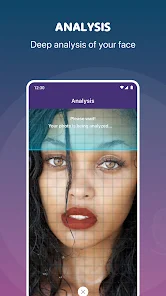
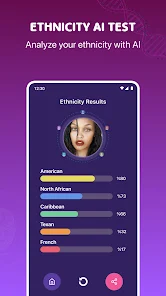
1. Fine-grained ancestry gradients reveal continuous genetic contributions across geographic space, enabling detection of subtle regional differences and admixture patterns that single-point ancestry estimates miss. This high-resolution approach helps users pinpoint ancestral origins at sub-national scales and better understand complex mixed heritage through probabilistic gradient mapping and comparative reference panels.
2. Interactive visualization tools present ancestry gradients on dynamic maps with adjustable sliders, layered references, and side-by-side comparisons, making complex data immediately comprehensible. Users can explore temporal or generational scenarios, export publication-quality graphics, and customize views to communicate findings to family members, genealogists, or researchers without needing specialist bioinformatics skills.
3. Privacy-first architecture supports local computation, encrypted storage, and fine-grained consent controls so users retain ownership of their genetic data while still sharing anonymized gradient summaries. Secure APIs and standardized export formats enable integration with genealogy services and research databases, facilitating collaboration and reproducible reporting while minimizing data-exposure risks.
1. Limited accuracy and interpretation: Results depend on reference panels and algorithms, producing probabilistic ancestry estimates that can misclassify closely related populations, obscure recent admixture, or overstate certainty. Users may misinterpret percentages as definitive lineage, leading to incorrect genealogical conclusions without corroborating corroborating records or expert guidance.
2. Privacy and data security risks: The app collects sensitive genetic information that may be stored long-term or shared with third parties. Weak encryption, ambiguous consent policies, or data breaches could expose users to identity, insurance, or employment discrimination. Difficulty deleting or fully anonymizing uploaded raw data raises lasting privacy concerns.
3. Cost, usability, and compatibility limitations: Many advanced features may require subscriptions or in-app purchases, limiting access for casual users. The interface can be confusing for nontechnical users, customer support may be slow, and the app might not accept all raw DNA formats or integrate with other genealogy services, reducing overall utility.